Do You Need an AI Assistant That Supports 57 Languages?
Wondering if your WordPress site needs a multilingual AI assistant? Discover how supporting 57+ languages impacts lead capture, engagement, and business growth.
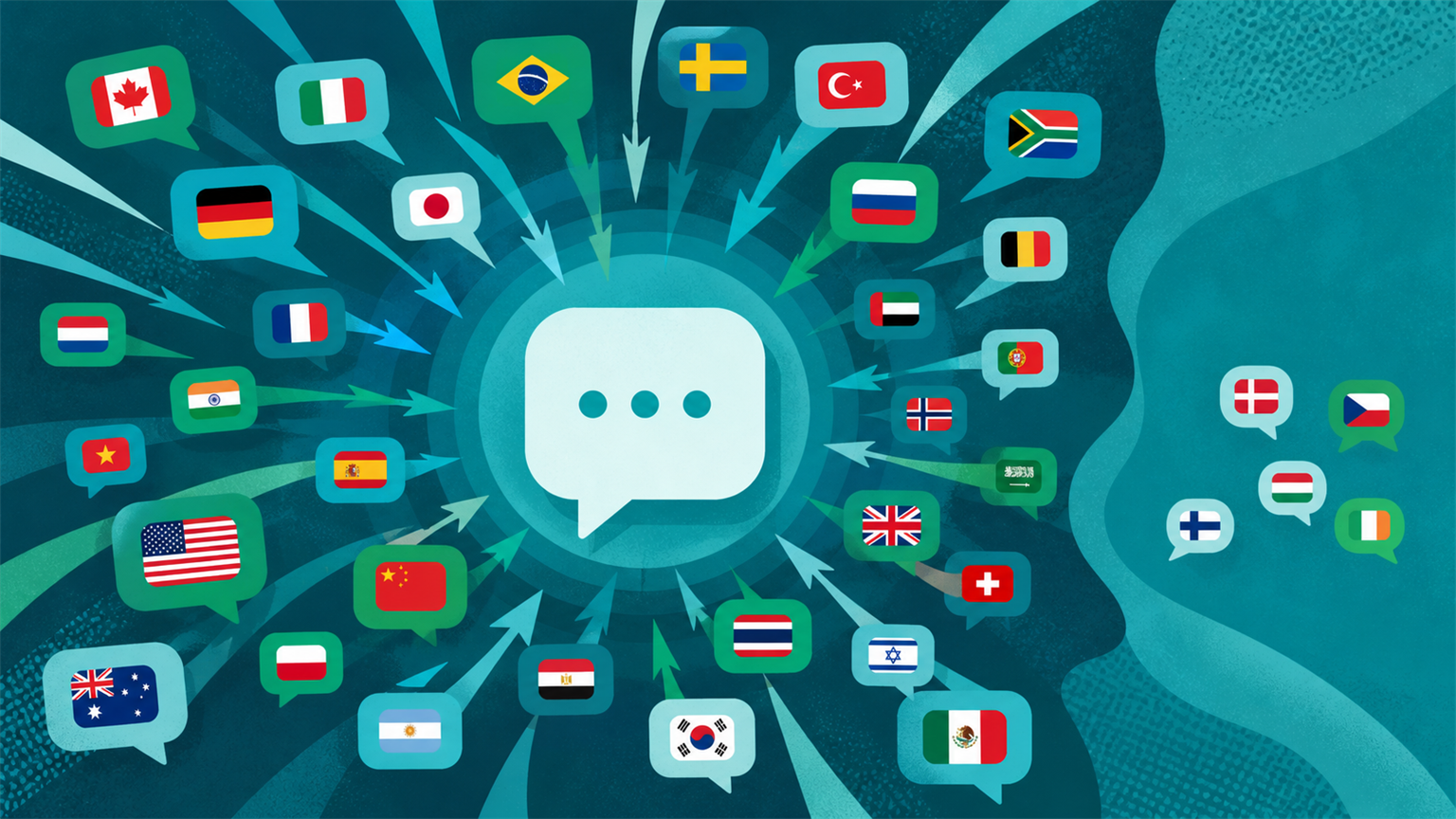
If you’re trying to decide whether your website needs an AI assistant that can handle over 57 languages, you’re not alone. By the end of this post, you’ll have a clear understanding of what it actually means for a WordPress site to offer true multilingual coverage, when it matters for a service business, and how it shapes lead capture and customer satisfaction—so you’ll know exactly what to look for and whether your goals justify the investment.
Does Your Business Really Need Multilingual AI on WordPress?
Here’s the straightforward truth: Most WordPress AI assistants on the market offer support for English and a handful of common languages—Spanish and French are typical. But if your visitors speak a language outside those, responses can break down, misunderstandings creep in, and leads slip away before you ever hear about them. The gap between supporting five major languages and supporting dozens is real, especially for service businesses competing for every inquiry.
For a dentist, attorney, or home services provider, what matters is simple: Can your website greet someone, understand their need, and capture their information—no matter what language they speak? If even a fraction of your audience might not be fluent in English, and you’re in a market where losing one lead is costly, the difference between “multilingual” and actually multilingual is more than a nice-to-have. It’s a competitive edge.
If you want a practical walk-through on when a multilingual chatbot plugin is truly worth it for your WordPress site, there’s a guide on when a multilingual chatbot plugin is right for your site that gets right to the point.
How Many Languages Do Most WordPress AI Assistants Handle?
This is a detail glossed over by many plugin listings. The honest answer: Most solutions on the WordPress plugin marketplace advertise “multilingual support,” but drill into the documentation and you’ll usually find a range of five to ten languages, with real-time translation or proper understanding limited to maybe three or four. That’s fine if your clientele is overwhelmingly English- or Spanish-speaking, but in cities like Miami, Los Angeles, Toronto, or Houston, the reality is far messier: you may see Mandarin, Haitian Creole, Vietnamese, Portuguese, and more—all in a day.
Some plugins attempt to expand language coverage using automatic translation. That works for static content, but real conversation—understanding intent, knowing when someone is giving their phone number, or stating their reason for reaching out—doesn’t translate perfectly. Context gets lost, and so do leads. The real solution is matching each visitor’s voice or text with a system trained to understand and respond natively in their own language, in real time, without friction or awkward pauses.
Put simply, the difference between “supports a few languages” and “handles nearly sixty” is not just a technical brag. For many businesses, it’s the difference between earning the trust of a local Portuguese speaker or seeing them leave for a competitor who answers promptly in their own words.
How Multilingual AI Assistants Change Lead Capture (and Why That Matters)
A service business website has one job: greet a visitor, answer questions, and open the door to a personal follow-up. The faster and more clearly you can do that, the fewer leads you miss—especially after hours or when your front desk is swamped. So, does supporting 57+ languages translate into more conversations and more leads?
- Broader Coverage: Multilingual support means more of your visitors can actually use your site as intended. If someone lands on your contact page, speaks Arabic or Japanese, and is greeted immediately in their language, you’ve broken down the first—and often biggest—barrier.
- Higher Engagement: People are far more likely to enter their details, state their needs, and stick around if they’re spoken to naturally, not through clunky machine translation or “Sorry, only English is supported” dead-ends.
- Cleaner Handoffs: A top-tier multilingual AI should deliver every conversation back to you, in English, with a structured recap and clear action items. No guessing at what the visitor wanted, no emails lost in translation. That’s true whether the original chat happened in Korean or Portuguese.
- Fewer Missed Leads: This is where the ROI comes in. If your market includes even a few non-English first speakers—say, 5-10%—that could mean dozens of extra leads per year. For many service businesses, that’s the difference between a full appointment book and a slow month.
Explore how missing a web chat can quietly sap service businesses of real money and opportunity in this breakdown on the cost of missed web chats. It’s rarely a problem of too much information—it’s almost always about too little, too late.
Benefits of Supporting 57+ Languages vs. Fewer: Where Does It Pay Off?
| Coverage Level | Who It Helps | Business Impact | Potential Pitfalls |
|---|---|---|---|
| 5-10 languages | Mainstream metropolitan sites with low language diversity | Answers basic needs, misses outliers; OK for mostly English-speaking markets | Fails for unusual requests; can look like “token” support; drops rare-language visitors |
| 20-30 languages | Large cities, travel/tourism, local businesses in multicultural areas | Covers most expected traffic; handles typical diversity, but not all edges | Still leaves occasional gaps—minor, but persistent over time |
| 57+ languages | Multi-location service businesses; medical, legal, or technical providers in truly global or diverse markets | Rarely misses an incoming lead due to language; competitive differentiation; higher customer trust | Slightly higher tech demands; some rare languages may still have minor imperfections |
In short: 5 languages make your website accessible to the average visitor. Over 50 make it accessible to your entire market, including the expensive or high-value leads most businesses can’t afford to lose. For professionals—like law firms or dental practices—where each inquiry matters, this can make or break your pipeline. See how this matters for specific fields in guides on voice AI for law firms, AI assistants for dental practices, and AI agents for home services companies.
What Multilingual AI Success Looks Like: A Step-by-Step Website Flow
- A visitor arrives—from search, a referral, or direct type-in. Instead of a standard English chat bubble, they see (or hear) an offer to communicate in their preferred language. This simple moment already removes friction.
- The AI assistant greets them and listens—in the visitor’s voice or text, the language is detected automatically, so there’s no language drop-down or manual setting.
- Real conversation begins—the assistant understands the questions, context, and even local idioms. When needed, it asks the visitor for their phone, name, or service need in a way that feels natural—not translated line-by-line.
- Key details are captured—the AI makes sure it gets the information that matters for your follow-up: name, best contact, intent, and any specifics tied to your business (say, zip code for a home estimate).
- Immediate recap, in English—when the chat wraps up, your business receives a clear, organized recap and the transcript, all translated into English and ready to review or forward.
- No request lost in the shuffle—if that conversation happened outside office hours or while you were with another client, you haven’t missed out. The path from visitor question to business follow-up isn’t broken by language barriers.
That’s the workflow that supports a real 24/7 presence—keeping you open to conversations you’d otherwise never have known about. If you’re wondering how these steps differ from older chatbot “translation” plugins, the key difference is the depth of real intent capture, not just word conversion.
For a bird’s-eye view of which voice agents for WordPress can actually deliver on this workflow, this voice agent buyer’s guide offers a comparison of solutions built for service businesses.
Choosing a Multilingual AI Assistant: What Actually Matters
- Language Coverage: Don’t just count the number—ask which languages are natively understood, not simply machine-translated. Is your local audience covered?
- Lead Handover: Can you read and act on the conversation recap easily? Is everything summarized in English when you receive it?
- Voice and Text: If your audience includes older adults, non-typists, or people browsing on their phone, does the assistant support both voice and typed chat, and in every language?
- No Coding Required: For the busy business owner, setup matters. Installation should be as straightforward as adding a plugin from your WordPress dashboard.
- Privacy and Ownership: Your customer data and site content should live on your system, not someone else’s cloud. Make sure your assistant drafts blog posts to your site and keeps transcripts secure.
Look for an assistant that treats language support as a direct driver of leads—because in a competitive local market, that’s exactly what it is.
Deciding If 57+ Language AI Is Right for Your Site
Supporting 57 or more languages may sound like overkill at a glance, especially if you’re only aware of English and Spanish requests. But what it really buys you is insurance: insurance against missing out on a high-value client who decides in the first 30 seconds whether you’ll get their business, and assurance that your website doesn’t unintentionally send diverse visitors elsewhere.
If your business can’t afford to lose a single lead, or you operate in an area with a multilingual population, true global coverage isn’t just a feature—it’s a filter for serious lead capture. For others, it might be more future-proofing than necessity, but very few regret making their business more approachable and responsive.
If you’re ready to add a multilingual AI assistant built specifically for WordPress, with real 24/7 coverage and structured lead recaps that keep every detail clear, try SiteStaffr now—start with the AI Voice Agent for Home Services to see how easy it is to set up and start answering every website visitor, in any language.